

I walked out of treatment with confidence. Maybe even a little pride.
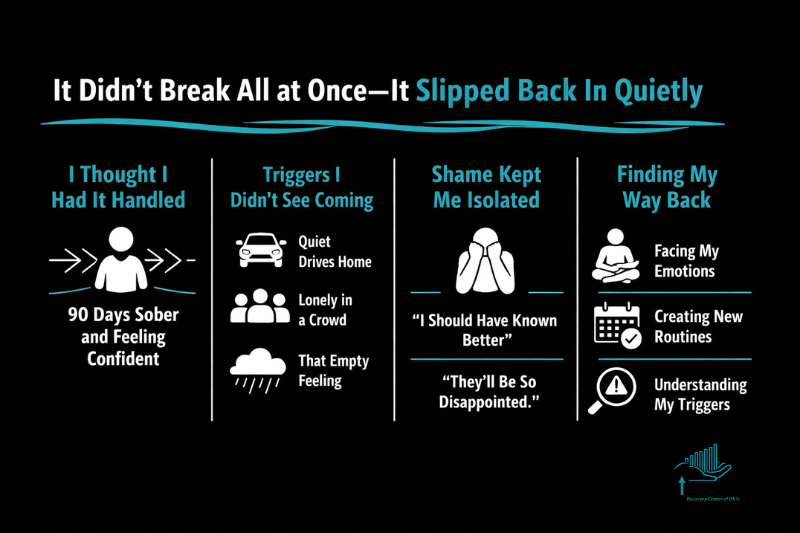
I had done the work. I showed up every day. I said the right things, felt the right feelings. I believed I had crossed some invisible line where alcohol just… wouldn’t have a hold on me anymore.
And for a while, it didn’t.
But I didn’t realize how much of recovery happens after the structure fades.
That’s something I wish I understood sooner—something I later found in care in Alcohol. Not as a reset, but as a continuation.
The Triggers Didn’t Look Like Triggers
I expected obvious things to test me—bars, parties, bad days.
What I didn’t expect were the quiet moments.
- Driving home after work in silence
- Feeling disconnected in a room full of people
- That low, restless feeling I couldn’t explain
It didn’t feel like a crisis. It felt like… nothing.
And that “nothing” was uncomfortable enough to make drinking feel like a solution again. Sometimes what looks like boredom, restlessness, or emotional numbness is actually when stress is more than stress, showing up in ways that are easy to overlook during recovery.
I Didn’t Relapse Because I Didn’t Care
That’s the part that messed with me the most.
I cared deeply. I wanted sobriety.
But wanting something and knowing how to live inside it are two different things.
Relapse didn’t come from rebellion—it came from not knowing what to do with myself when things got hard, or boring, or emotionally confusing.
No one really talks about how disorienting that middle space can be.
Shame Got Louder Than My Support System
After I drank again, I didn’t tell anyone.
I told myself it was just a slip. That I could fix it quietly.
But shame has a way of isolating you faster than anything else.
The longer I stayed quiet, the harder it felt to reach back out. I started thinking things like:
- “They’re going to be disappointed.”
- “I should’ve known better by now.”
- “Maybe I’m just not someone who gets this.”
If you’ve ever experienced when a slip makes you question recovery, you know how quickly self-doubt can turn a single setback into a story about your entire future.
That’s the lie relapse tries to sell you—that you’ve somehow disqualified yourself from getting better.
Going Back Didn’t Mean Starting Over
Walking back into support felt awkward. I won’t lie.
But no one treated me like I had failed. No one made me prove anything.
They just… met me where I was.
For many people, that moment comes after realizing when drinking starts taking something away—whether it’s peace of mind, relationships, confidence, or the sense of being present in your own life.
And this time, I paid attention to the parts I rushed through before:
- Learning how to sit with uncomfortable emotions
- Building routines that didn’t rely on willpower alone
- Understanding my personal triggers, not just the obvious ones
That’s where something like outpatient alcohol rehab Columbus started to make sense for me. Not as a punishment—but as a way to actually live what I had learned.
You Didn’t Ruin Everything—You Found What Still Needs Care
If you’re reading this after a relapse, I want you to hear this from someone who’s been there:
You didn’t erase your progress.
You uncovered what still needs attention.
There’s a difference.
Recovery isn’t about getting it perfect—it’s about getting honest. Sometimes more than once.
And if you need a place to land again, there’s real support in Addiction that understands what this part feels like—not just the beginning.
You’re Allowed to Come Back
There’s no version of this where you have to prove you deserve help again.
You already do.
Call 866-514-6807 or visit treatment in Ohio to learn more about our addiction treatment in ohio, alcohol treatment in ohio services in Columbus, Ohio.