
You didn’t plan for this.
Most people don’t. It’s not some dramatic collapse—it’s usually quiet. A moment. A decision that didn’t feel like a decision at all. And now you’re here, wondering if everything you built just… disappeared.
It didn’t. But it might feel like it did.
If you’re looking for something structured during the day—and a way to go home at night—you’re not alone. And there is a path forward that doesn’t erase who you’ve already become.
Early on, you can explore options like this addiction program in ohio, partial hospitalization program in ohio without committing to starting from zero.
It Doesn’t Feel Like a “Small Slip”
Relapse after 90 days hits differently.
It’s not confusion anymore—it’s disappointment. You knew what worked. You had routines. Maybe even pride. And now there’s this voice saying, “You should’ve known better.”
We hear that voice a lot.
But here’s the truth most people don’t say out loud: relapse doesn’t erase progress. It exposes where support needs to change.
Not restart. Adjust.
The Fear of Going Back to “Square One”
One of the biggest reasons people hesitate to come back is this idea that they’ll have to start over completely.
Same intake questions. Same early-stage conversations. Same feeling of being “new.”
That’s not how it should feel.
If anything, you come back with more awareness. You know your triggers better. You’ve seen what works—and what doesn’t hold under pressure.
That matters.
And it should shape the kind of care you step into next.
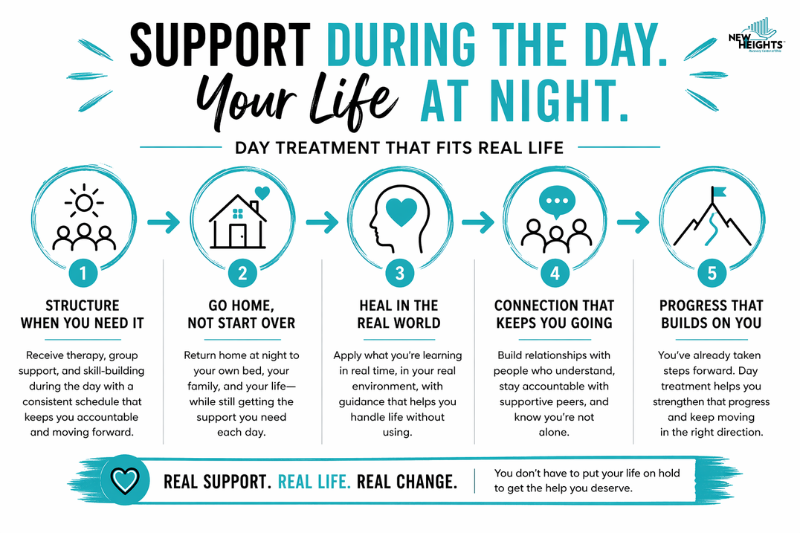
Structure During the Day, Your Life at Night
For a lot of people in this exact spot, full residential care doesn’t feel right anymore.
You’ve already done that level of intensity—or you know you don’t need 24/7 supervision.
But white-knuckling it alone during the day isn’t working either.
That’s where structured daytime care can make sense.
You spend your days in therapy, group support, and real accountability. Then you go home at night—back to your environment, your responsibilities, your real life.
It’s not about removing you from everything.
It’s about helping you rebuild inside it.
If you’ve been searching for something like day treatment near Columbus, this is often what people are actually looking for—they just don’t always have the language for it.
You’re Not the Only One Who’s Been Here
We’ve worked with people who hit 60 days. 90. A year.
Then something cracks.
Stress builds quietly. Old patterns creep in. Or life just hits harder than expected.
And they come back thinking they failed.
But what we actually see?
People who are closer than they think. People who don’t need to relearn everything—just reconnect and reinforce what started working.
“I thought I’d be judged for coming back. Instead, they treated me like someone who already knew the path—I just needed help getting back on it.”
– Alumni, returning after relapse
The Part No One Talks About: Shame Keeps People Stuck
Not the relapse itself.
The silence after.
The missed calls. The avoided check-ins. The “I’ll figure it out myself this time.”
Shame isolates. And isolation feeds the cycle.
Getting support again—especially in a way that fits your life now—isn’t going backward.
It’s interrupting the spiral earlier this time.
What Support Can Look Like Right Now
You don’t have to jump into the deepest level of care to get help.
Sometimes it starts with something more flexible. Something that meets you where you are today, not where you were on day one.
That might include:
- Re-engaging in structured daytime programming
- Rebuilding routine and accountability
- Processing what led to the slip (without judgment)
- Strengthening coping tools in real-time environments
If alcohol played a role in your relapse, it may help to explore options for treatment in alcohol that fit your current stage—not your past one.
Or if your use shifted, getting the right kind of support in addiction can help you stabilize without overcomplicating things.
You Haven’t Lost Everything
It feels that way. We know.
But relapse doesn’t wipe out the version of you that made it 90 days. That person still exists.
You just need support that meets you here, not back at the beginning.
And if you’re ready—even a little—you don’t have to figure it out alone.
Call 866-514-6807 or visit our page on addiction program in ohio, partial hospitalization program in ohio to learn more about our addiction program in ohio, partial hospitalization program in ohio services in Columbus, Ohio.