
You don’t have to be falling apart to want something better.
If you’re quietly wondering whether alcohol is taking more than it’s giving and if treatment could help, you’re not alone. Many people explore alcohol addiction treatment not because they’ve hit bottom, but because they’re ready to stop wondering “what if?”
This guide is for the sober curious, the high-functioning, the quietly questioning. Here’s what treatment can look like long before things fall apart.
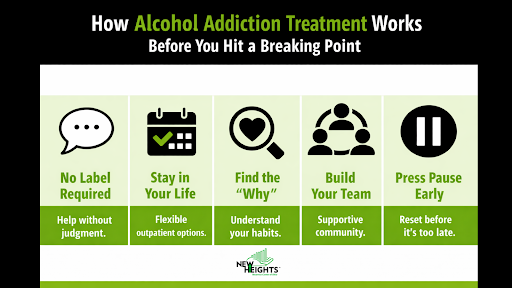
You Don’t Need to Identify as an “Alcoholic” to Get Help
Modern alcohol treatment isn’t just for people who drink all day or end up in the ER. It’s for anyone who wants more energy, more clarity, more control over their life. Whether you’re drinking every day or just more than feels good lately, treatment is available and valid for you.
Treatment Starts with a Conversation, Not a Label
At New Heights Recovery Center, the first step is a human one: a real conversation. No clipboards. No lectures. Just a trained intake team helping you explore what’s going on and what support could look like. Whether you’re feeling unsure, nervous, or not even certain if you belong in treatment, those are all normal. And welcome.
You Can Still Work, Parent, and Live While Getting Support
Treatment doesn’t always mean checking into a facility for 30 days. Many people begin with outpatient support, seeing a therapist, joining a group, or working through habits while still living life. Alcohol addiction treatment can be discreet, flexible, and built around your actual needs, not someone else’s crisis.
You’ll Learn More Than Just How to Stop Drinking
What pulls many people in isn’t just quitting drinking, it’s discovering why they were drinking in the first place. Treatment helps uncover the why behind the wine and gives you practical tools to build something stronger in its place. You’ll learn to manage stress, build healthier routines, and connect more honestly with yourself and others.
You’ll Build a Support Team That Gets It
You don’t have to figure this out alone. The right treatment program surrounds you with clinicians, peers, and resources who understand where you are—because they’ve seen it before. Not everyone in the room will be at the same place. And that’s okay. You’ll find connection without comparison.
You Can Press Pause Before Things Explode
Maybe you’ve noticed yourself slipping more drinks after work, fuzzier mornings, more internal bargaining. Treatment offers a safe pause. A place to ask, “Is this working for me?” before it becomes “How did I let it get this far?”
If you’re beginning to question your drinking habits, there are alcohol addiction treatment options designed for you even if your life still looks fine on the outside. You don’t need chaos to choose clarity.
You’re Allowed to Want More
More mornings you remember. More conversations you mean. More peace at the end of the day. Alcohol doesn’t have to ruin your life for it to take too much from it. And you’re allowed to want it back, gently, honestly, and with support.
If you’re looking for help in Alcohol, New Heights Recovery Center is here to meet you where you are, not where someone else thinks you should be.
📞 Ready to explore your next step?
Call 866-514-6807 or visit New Heights Alcohol Addiction Treatment to learn more about our alcohol addiction treatment services.