
You thought maybe last time was the turning point. And now you’re here again—scared, tired, and questioning everything. From where I sit as a clinician, I want you to know: this moment matters more than you think.
Early on, many parents start searching for answers and quietly come across things like the help in Alcohol page, trying to understand what real support actually looks like. Let’s walk through it together—clearly, honestly, and without judgment.
This Isn’t Just “Bad Decisions” Anymore
It’s common for parents to wonder: Is this just a phase? Stress? College culture?
But if your child is using again, your instincts are already picking up on something deeper. You may be noticing signs of alcohol dependence—even if you don’t want to name it that yet. Many families assume the hardest part is getting someone into treatment, but life after finishing treatment often comes with its own challenges, adjustments, and need for continued support.
Things like:
- Drinking despite consequences
- Hiding or minimizing use
- Mood swings or withdrawal from family
- Promises to stop that don’t last
This isn’t about blame. It’s about recognizing patterns that need support—not punishment.
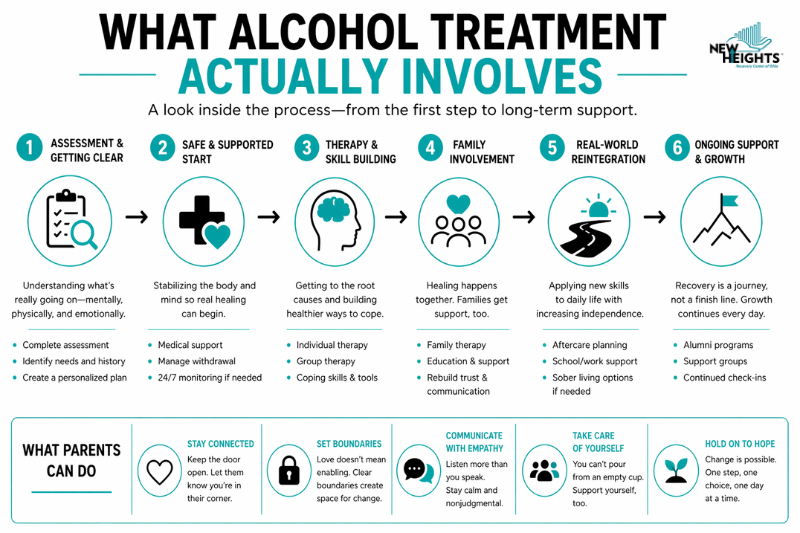
What Alcohol Treatment Actually Looks Like (From the Inside)
Treatment isn’t one rigid path. It’s a series of options, adjusted based on what your child needs right now.
Here’s what that can include:
A safe starting point:
Some begin with medical support to stabilize physically. This can help manage withdrawal and reduce risk.
Structured daytime care:
Think of this as full days of therapy, support, and accountability—without staying overnight.
Multi-day weekly treatment:
This allows young adults to stay somewhat connected to life while still getting consistent clinical care.
Individual and family therapy:
Because this doesn’t just affect them—it affects you, too.
Treatment is less about “fixing” your child and more about helping them rebuild stability, insight, and coping skills. For many families, learning what therapy is really like can ease some of the uncertainty and help set realistic expectations about the recovery process.
Why Relapse Doesn’t Mean Failure
This part is hard. I know.
But relapse isn’t proof that treatment didn’t work—it’s often a sign that more support, or a different kind of support, is needed.
Many young adults:
- Leave treatment too early
- Struggle with underlying mental health issues
- Return to the same environments too quickly
Relapse is information. Painful, yes—but useful.
It tells us where the gaps are.
What Parents Often Get Told (That Isn’t Fully True)
You may have heard things like:
- “They have to want it.”
- “There’s nothing you can do.”
- “Tough love is the only way.”
There’s some truth in those statements—but they’re incomplete.
You still matter. Your role just shifts.
Instead of trying to control outcomes, you focus on:
- Setting boundaries
- Staying emotionally steady
- Encouraging treatment without forcing it
It’s less about pulling them out—and more about creating a path they can step into.
Your Role Changes—but It Doesn’t Disappear
You are not powerless here.
But the way you help might look different than before.
It can mean:
- Not rescuing them from consequences
- Being clear about what you will and won’t support
- Staying connected without enabling
One parent once told me, “It feels like loving them from a distance I didn’t choose.”
That’s real. And it’s something we help families navigate every day.
What Happens Next Doesn’t Have to Be Guesswork
You don’t need to have all the answers today.
But getting clear on your options can bring some of your footing back.
If you’re starting to explore next steps, looking into care in Addiction can help you understand how different levels of support work and what might fit your child best.
You’re Allowed to Want Things to Be Different
You can love your child deeply and still feel exhausted.
You can support them and still set limits.
And you can hope for change—even if you’ve been disappointed before.
That tension doesn’t make you weak. It makes you human.
Recognizing when your child needs more recovery support is often one of the hardest parts of being a parent, but seeking additional help can be an act of care for both your child and yourself.
Ready to Talk Through What This Could Look Like?
If you’re trying to figure out what to do next, you don’t have to do it alone.
Call 866-514-6807 or visit our addiction treatment in ohio, alcohol treatment in ohio services in Columbus, Ohio to learn more about what support can look like right now.