Someone searching for answers about skin popping is often trying to understand whether it’s really safer than injecting into a vein. The short answer is no. While injecting under the skin may seem like a way to avoid damaged veins, it carries its own serious medical risks that can become life-threatening if ignored.
If this question is connected to your own substance use—or someone you care about—it may also be a sign that the situation has progressed beyond what feels manageable. Learning the risks is an important first step, and support is available through heroin addiction treatment without judgment.
What Is Skin Popping?
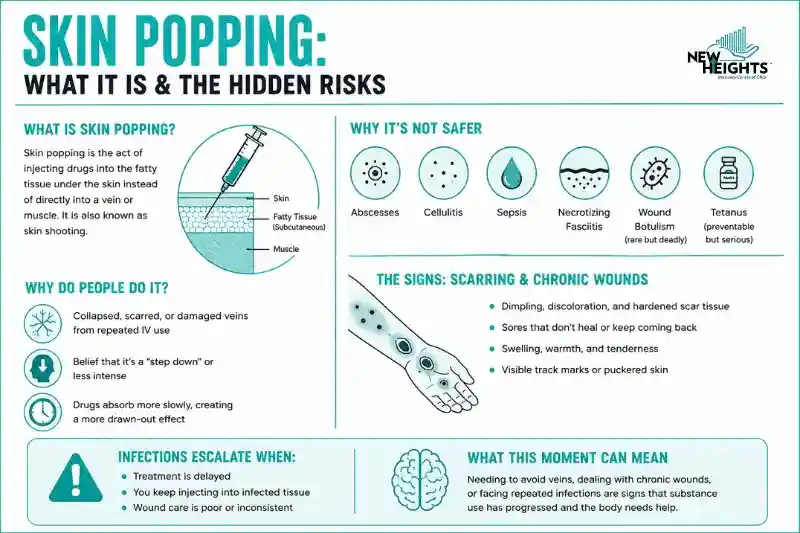
Skin popping is the practice of injecting a drug into the tissue just beneath the skin rather than directly into a vein or muscle. It is also sometimes called skin shooting.
Instead of entering the bloodstream immediately, the drug is absorbed more slowly through the fatty tissue. Some people intentionally use this method, while others switch to it after repeated intravenous injection has damaged or collapsed their veins.
Although it may appear less dangerous because it avoids a vein, injecting beneath the skin creates a different set of medical problems—many of which involve severe infections and long-term tissue damage.
Why Do People Switch to Skin Popping?
There are several reasons someone may begin injecting this way.
A common reason is that years of intravenous drug use have made veins difficult or impossible to access. Scar tissue, collapsed veins, and repeated failed injections can leave few usable sites.
Others believe skin popping is a “step down” from intravenous injection because the effects may develop more gradually. Some assume that avoiding a vein automatically makes the practice safer.
Unfortunately, that belief is misleading. Injecting into tissue that isn’t designed to receive these substances increases the likelihood of infection, tissue injury, and chronic wounds.
Why Skin Popping Is Not Safer Than Injecting Into a Vein
The skin acts as the body’s first line of defense against bacteria. Every injection creates an opening that allows germs to enter deeper tissue.
Because drugs injected under the skin often remain concentrated in one area, they can damage tissue and create an environment where bacteria thrive.
Some of the most serious complications include:
- Abscesses: painful pockets of pus that often require drainage
- Cellulitis: a bacterial skin infection that can spread rapidly
- Sepsis: a life-threatening reaction when an infection enters the bloodstream
- Necrotizing fasciitis: a rare but devastating infection that destroys tissue quickly
- Wound botulism: an uncommon but potentially fatal illness linked to contaminated drugs, particularly black tar heroin
- Tetanus: a preventable but serious infection affecting the nervous system
These conditions can worsen quickly, especially when treatment is delayed.
The Physical Signs Can Last Long After the Injection
Skin popping often leaves visible changes that become more noticeable over time.
Repeated injections may cause:
- Dimpling or depressions in the skin
- Dark discoloration or permanent scarring
- Thickened areas of scar tissue
- Chronic open sores
- Wounds that repeatedly heal and reopen
- Areas that remain swollen, tender, or warm
These changes aren’t only cosmetic. Chronic wounds create repeated opportunities for bacteria to enter the body, making future infections more likely.
Why These Infections Often Become More Serious
One reason skin popping can become so dangerous is that infections are frequently ignored until they become severe.
Someone may continue injecting into the same painful area because other injection sites are no longer available. An abscess may be mistaken for a bruise, or redness may seem like something that will improve on its own.
Without medical care, bacteria can spread through surrounding tissue or into the bloodstream. Delayed treatment often means more extensive infection, more difficult recovery, and a greater chance of hospitalization.
Basic wound care alone cannot treat many of these infections once they become established.
When Skin Popping Becomes a Sign Something Has Changed
Many people don’t begin using this method because they want to. Instead, it often reflects the progression of substance use and the physical damage that has already occurred.
Needing to avoid damaged veins, living with wounds that won’t heal, or repeatedly dealing with infections can become a turning point. Rather than seeing these problems as isolated medical issues, they may signal that substance use has reached a level where additional support could make a meaningful difference.
For people throughout Columbus, Franklin County, Delaware County, Licking County, and surrounding communities, exploring options for addiction treatment in Ohio can be an opportunity to address both the medical complications and the underlying substance use.
If skin popping has become part of the pattern—the infections, the scars, the escalation—that’s the body signaling it needs help. Our heroin addiction treatment in Columbus OH team provides confidential, non-judgmental care. You can call anytime.
Frequently Asked Questions
Is skin popping less dangerous than injecting into a vein?
No. While it avoids direct access to a vein, skin popping significantly increases the risk of serious skin and soft tissue infections, chronic wounds, and potentially life-threatening complications such as sepsis or wound botulism.
Can wounds from skin popping heal on their own?
Small wounds sometimes improve, but persistent redness, swelling, warmth, drainage, severe pain, or fever may indicate an infection that requires prompt medical treatment. Delaying care increases the risk of more serious complications.
Why do people begin skin popping?
Many people switch because repeated intravenous drug use has damaged their veins, making them difficult to access. Others mistakenly believe it is a safer alternative. In reality, it carries its own serious health risks and often reflects progression of substance use.