
A month ago, you may have felt hopeful.
Your son completed detox. He sounded clearer. Maybe he was making plans again. For families who feel like they are constantly waiting for the next crisis, additional structure can restore a sense of stability. Then the phone call came. Or you noticed the changes. The missed texts. The familiar excuses. The sinking feeling in your stomach that told you something wasn’t right.
If you’re a parent watching your 20-year-old use again after detox, you’re not alone in wondering what comes next. More importantly, a slip after detox does not automatically mean treatment failed. Sometimes it means a person needs a different level of support to bridge the gap between getting sober and learning how to stay sober.
For families trying to understand the next step, programs like a partial hospitalization program in Ohio can provide more structure during a vulnerable stage of recovery.
Detox Solves One Problem, Not Every Problem
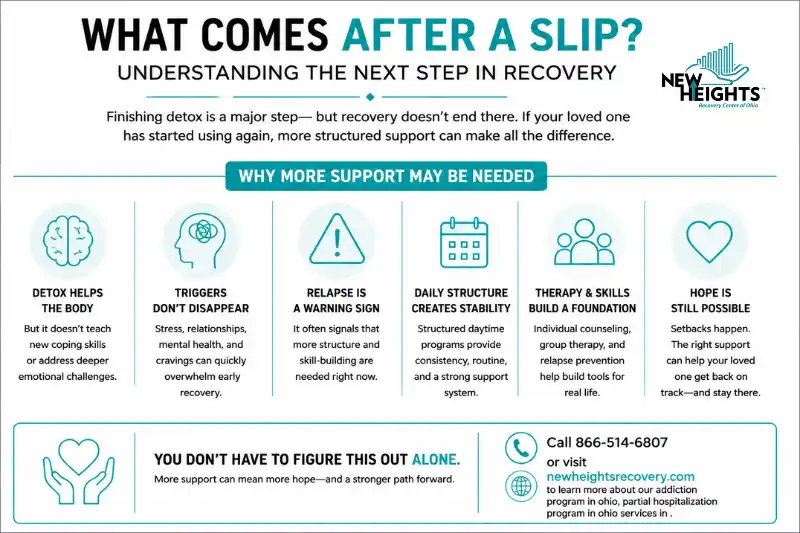
Detox helps the body stabilize.
What it doesn’t do is teach someone how to navigate cravings, stress, old relationships, boredom, anxiety, depression, or the countless triggers waiting outside the treatment setting.
Many parents understandably assume that once detox is complete, recovery should naturally follow. In reality, detox is often the starting line rather than the finish line.
Imagine someone stepping out of a storm shelter while the storm is still moving through town. They’re safer than they were before, but they still need protection and guidance to make it home.
That’s often what happens after detox.
Why Relapse Can Happen So Quickly
A return to substance use after detox is painful to witness, but it is rarely caused by a lack of love or effort.
Young adults often face challenges that make early recovery especially difficult:
- Returning to the same social circles
- Living with untreated mental health concerns
- Feeling pressure to “be normal” again
- Struggling with motivation or purpose
- Underestimating how strong cravings can be
Parents frequently tell me they feel guilty, wondering what they missed.
The truth is that recovery involves learning entirely new ways to respond to stress, emotions, and daily life. That takes time, repetition, and support.
The Signs Someone May Need More Than Weekly Counseling
Weekly therapy can be incredibly valuable.
But there are situations where a higher level of care may provide a better chance for stability.
Some warning signs include:
- Using shortly after completing detox
- Frequent cravings that feel overwhelming
- Missing appointments or recovery meetings
- Ongoing mental health symptoms
- Spending time with people connected to past substance use
- Difficulty maintaining work, school, or responsibilities
These situations don’t mean someone is failing.
They may simply indicate that more structure is needed while new recovery skills are taking root.
What Structured Daytime Treatment Actually Looks Like
Many parents worry that additional treatment means starting over completely.
That’s not usually the case.
Structured daytime care allows people to spend significant portions of their week focused on recovery while still returning home afterward. Treatment often includes individual counseling, group therapy, relapse prevention planning, family support, and help addressing underlying emotional challenges.
The goal isn’t punishment.
It’s practice.
Recovery skills are much like learning to drive. Reading the handbook helps, but real confidence comes from repeated practice with guidance nearby.
That’s why many families explore after detox programs Ohio residents can access when a loved one needs more support than traditional outpatient counseling provides.
What Parents Can Do Right Now
One of the hardest parts of loving someone with a substance use disorder is accepting that you cannot recover for them.
You can, however, create conditions that support recovery.
Quick Tips for Parents
- Stay connected without trying to control every decision
- Focus on honest conversations instead of lectures
- Encourage professional support early
- Take care of your own mental and emotional health
- Seek family education and counseling when available
Your concern matters.
Your presence matters.
And setting healthy boundaries is not the same thing as giving up.
Hope Doesn’t Disappear Because Recovery Got Messy
Many successful recovery stories include setbacks that families never expected.
A relapse can feel like all the progress disappeared overnight. In reality, people often carry lessons, insights, and motivation from previous treatment experiences into their next phase of recovery.
The path forward may simply require more support than anyone originally anticipated.
If your loved one is struggling with substance use, exploring additional levels of care and seeking support in Drug treatment or broader help in Addiction services can provide clarity about what comes next.
Recovery is rarely a straight line. But a difficult chapter does not have to become the ending.
Call 866-514-6807 or visit our addiction program in ohio, partial hospitalization program in ohio services to learn more about our addiction program in ohio, partial hospitalization program in ohio services in Ohio.