
There are few experiences more frightening than watching your child change in ways you don’t understand.
Maybe they’re withdrawing from family. Maybe they’re using drugs or alcohol more often. Maybe their moods seem unpredictable, or they’ve started saying things that leave you worried about their safety. As a parent, you may feel like you’re constantly waiting for the next phone call, the next emergency, or the next sign that something is wrong.
If this sounds familiar, know that you’re not alone. Many families in Columbus find themselves searching for answers when mental health challenges and substance use begin showing up at the same time. For some young adults, a higher level of support than weekly therapy may be needed. That’s where a dual diagnosis treatment program in Ohio can become part of the conversation.
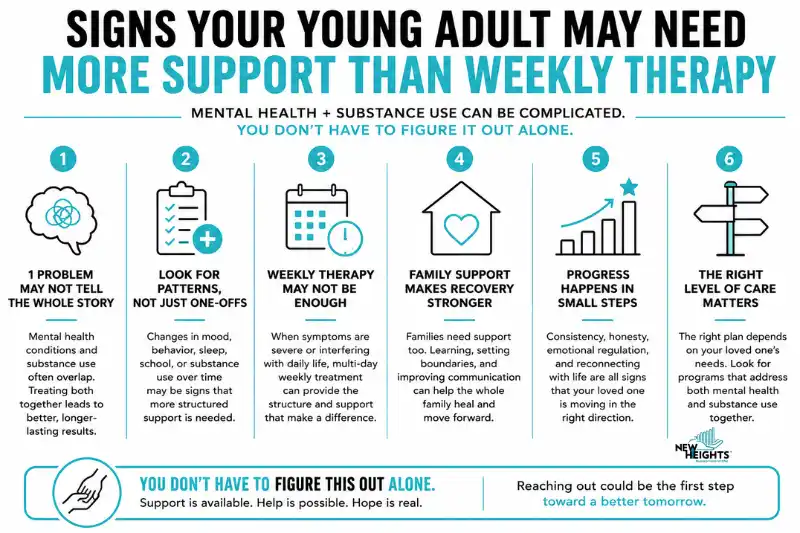
Sometimes It’s Not One Problem—It’s Two
One of the most confusing parts of a behavioral health crisis is trying to figure out what’s causing it.
Is your child struggling because of substance use? Is it anxiety, depression, trauma, or another mental health condition? Did one lead to the other?
The truth is that these issues often overlap.
Many young adults use substances to cope with emotional pain. At the same time, substance use can worsen existing mental health symptoms. It can become difficult to separate where one problem ends and the other begins.
Imagine trying to untangle two sets of headphones that have been sitting in the same pocket for months. Pulling on one cord affects the other. Mental health and substance use can work the same way.
The Signs Parents Often Notice First
Parents are usually the first people to recognize that something has changed.
You might notice:
- Sudden mood swings
- Isolation from friends and family
- Falling grades or work performance
- Increased substance use
- Changes in sleep patterns
- Risky decision-making
- Loss of interest in activities they once enjoyed
None of these signs automatically mean your child needs treatment. But when several appear together and continue over time, they may signal a need for more comprehensive support.
For families searching for a dual diagnosis program Columbus, these patterns are often what prompt that first online search.
Why Weekly Therapy Sometimes Isn’t Enough
Many parents begin by scheduling therapy appointments. That’s often a valuable first step.
But some young adults need more structure than a single session each week can provide.
When symptoms are severe, or substance use is actively interfering with daily life, a more intensive level of care may offer additional support. Structured daytime care or multi-day weekly treatment programs allow individuals to receive therapy, psychiatric support, skill-building, and recovery-focused services while continuing to live at home.
This approach can help bridge the gap between inpatient treatment and traditional outpatient counseling.
Support Can Include the Whole Family
Parents often carry a heavy burden during a crisis.
You may feel responsible for fixing the situation. You may spend nights researching treatment options, checking your phone, or wondering if you missed warning signs.
The reality is that families need support too.
Many treatment programs involve family education and communication support because healing rarely happens in isolation. When parents understand what’s happening and learn healthier ways to respond, the entire family system can become stronger.
That doesn’t mean causing the problem. It means becoming part of the solution.
What Recovery Can Look Like
Recovery is rarely a straight line.
Some young adults improve quickly. Others take longer to find stability. Progress often comes through small moments that are easy to overlook:
- Attending appointments consistently
- Being more honest about struggles
- Reconnecting with family
- Managing emotions more effectively
- Reducing or stopping substance use
- Beginning to plan for the future again
These milestones may not feel dramatic, but they matter.
For families exploring a dual diagnosis program Columbus, hope often begins with understanding that recovery isn’t about becoming a different person. It’s about helping someone reconnect with the healthiest parts of who they already are.
Finding the Right Level of Care
Every family’s situation is different.
The right treatment plan depends on factors such as symptom severity, substance use patterns, safety concerns, and personal circumstances. Some individuals benefit from outpatient services, while others may need a higher level of care before stepping down into community-based support.
As you explore options, it can help to look for programs that address both mental health and substance use at the same time rather than treating them as separate issues.
You may also want to explore broader resources for help in Addiction or specialized support in Drug recovery depending on your loved one’s needs.
You Don’t Have to Figure This Out Alone
If you’re reading this because you’re scared for your child, that’s understandable. Many parents reach this point feeling exhausted, confused, and unsure what to do next.
The good news is that support exists, and there are professionals who understand how complicated these situations can be.
Call 866-514-6807 or visit our dual diagnosis treatment services in Ohio to learn more about our addiction treatment in ohio, dual diagnosis treatment ohio services in Ohio.